A brick garden wall on an ME7 estate
A wall in an estate garden is usually modest: a dividing wall between two neighbours, or a low edge that keeps a raised bed off the lawn. Its build is plain, a concrete footing below and brick above, yet the quantities catch people out more than any other part of the job. Here the footing, the brick and the mortar are set out in turn, and one wall is taken through to a finished order.
Gillingham BM is the Gillingham and Hempstead delivery site of Discount Builders Merchants (KENT) LTD, the builders' merchant at Lower Road, Northfleet, DA11 9BB. There is one yard, and orders are placed on www.discountbm.co.uk.

Starting with the footing
Every brick wall sits on a strip of concrete, and the strip has to be wider than the brickwork above it and bedded in ground that will not move. Cut the trench down through the topsoil, take out anything loose, and place the concrete before any bricklaying starts. Estate gardens often hide rubble from the house building a short way below the turf, so expect some and dig through it.
The concrete comes from three numbers, the length of the run, the width of the trench and the depth of the pour, multiplied together. For a wall one brick thick, a trench about twice the width of the wall is the usual starting point, so the strip spreads the load across soft ground.
Brick for a one-brick wall
Between the two options, a single brick thickness is the better choice where the wall divides two gardens, because it carries its own weight and stands up to the wind. A half-brick wall works for a low edge, but a row of piers has to be built into it to keep it upright. Either way the count starts from the area in square metres, not from the length alone.
Multi bricks vary from one pallet to the next, so a wall built from two batches can look patched. Order the full number at one time, and dry-lay a course along the footing before any mortar goes down, so the colours can be seen sitting beside each other.
Sand, cement and the mortar
Mix the mortar by volume. For general brickwork, five parts of building sand to one of cement is the everyday choice, and one measuring container should serve every batch so the wall keeps one colour and one strength. Sand is taken off the brick count, at about a tonne for every thousand bricks laid.
Cement for the mortar is counted in 25 kg bags, seven to each tonne of sand at that mix. The concrete for the footing needs its own cement, worked out separately, so the two totals are added at the end rather than guessed at the start.
Coping and damp at the building
Without a top, rain gets into the head of the brickwork and frost does the rest. Either a course of bricks laid on edge or a stone cap will shed the water, provided the top has a gentle fall toward each face so the water runs off instead of pooling.
Where the wall abuts a house or a shed, moisture can climb from the ground into the joint, so a damp-proof course has to be built in at the foot of the contact. It is a separate line on the list, apart from the brick and the concrete, and it is the item most often forgotten.
Moving the materials to the back
The materials for a garden wall come as a few pallets of brick and a stack of bags. Work out where a barrow can run before the lorry arrives, because a pallet left beyond a gate costs time and a second carry. A drive shared with a neighbour may need agreeing first, and the yard should hear about the access before the day.
Bags are heavy on a narrow path, so the sand and cement should go nearest the work, with the bricks brought in by barrow in stages. Give the width of the side gate on the order, so the people loading the lorry know which packs will go through it.
Rules of thumb
| Bricks, one-brick wall | Roughly 120 bricks for each square metre of single-thickness wall, then 5 to 10 per cent more for cutting and breakage. |
|---|---|
| Bricks, half-brick wall | Around 60 bricks for each square metre. Piers are counted separately from the field of the wall. |
| Footing concrete | Run length times trench width times depth, giving the volume in cubic metres. |
| Ballast and cement for the concrete | Each cubic metre of concrete at a 1:5 mix uses about 1.9 tonnes of ballast and thirteen 25 kg bags of cement. |
| Mortar sand | Build the sand from the brick count: 800 bricks take about 0.8 tonnes of building sand. |
| Mortar cement | Seven 25 kg bags for each tonne of sand, at five parts sand to one of cement. |
| Coping | Measured along the length of the wall, plus a small margin at each end and for the fall. |
The shop has calculators that turn a measurement into a quantity.
Worked order: A 7 metre garden wall on an ME7 estate
| Product | Quantity | What it is for | Cost |
|---|---|---|---|
| Cookbridge Yellow Multi Stock Bricks | 800 at £0.65 | A wall 7 m long and 0.9 m high is 6.3 m2. At 120 bricks a square metre that is 756, and 5 per cent spare for breakage lifts it to 794, which is taken up to 800. | £520.00 |
| Bulk Bag Ballast 20mm | 2 at £40.00 | A footing 7 m by 450 mm by 225 mm holds about 0.71 m3 of concrete. That needs roughly 1.35 tonnes of ballast, which two bulk bags of around 0.8 tonnes each cover with a margin. | £80.00 |
| Bulk Bag Soft Building Sand Nepicar | 1 at £45.83 | Mortar sand for 800 bricks comes to about 0.8 tonnes, so a single bulk bag of that weight is enough. | £45.83 |
| 25kg Mastercrete Cement (plastic) | 16 at £7.99 | The cement is split between the two jobs. The footing takes ten bags, since 0.71 m3 at thirteen bags a cubic metre is 9.2, and the mortar for 800 bricks takes six, which gives sixteen. | £127.84 |
| Goods | £773.67 | ||
| Delivery to ME7 | £0.00 | ||
| Delivered total ex VAT | £773.67 | ||
| Delivered total inc VAT | £928.40 | ||
Bulk bags: the bags in this order are counted at about 0.8 tonnes each. That is a planning figure. The shop does not publish a weight for a bulk bag, so confirm the number of bags with the yard before ordering.
Not in this order: The coping, the damp-proof course at any house or shed contact, the spoil from the trench, and any piers or gate. A footing on made-up ground will need to go deeper than the one counted here.
The quantities are a starting point for a job of this size. Put the same goods in a basket on www.discountbm.co.uk with your own postcode to see the figure for your order, or send the yard your list.
On the shop today
The products this guide talks about, from the shop's Bricks aisle. Prices last checked .
-
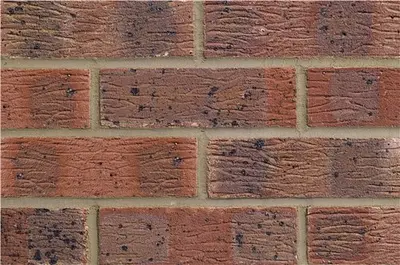 Multi Clayden Red
each
£1.62 inc VAT
£1.35 ex VAT
In the yard
-
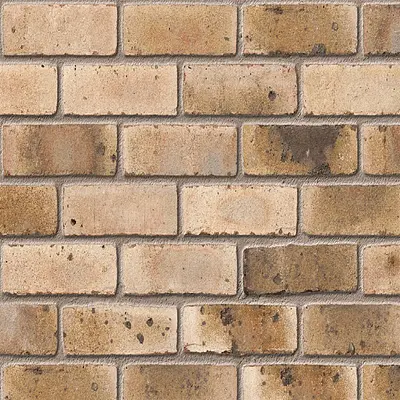 Cookbridge Yellow Multi Stock Bricks
each
£0.78 inc VAT
£0.65 ex VAT
In the yard
-
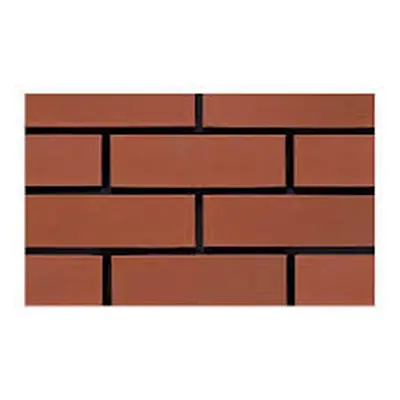 Red Class B Engineering Perf
each
£0.60 inc VAT
£0.50 ex VAT
In the yard
-
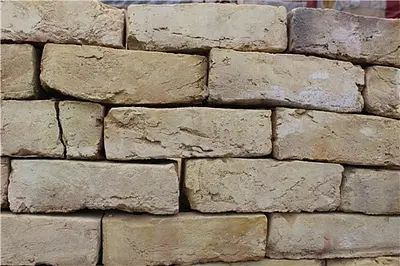 Second Hand Yellow Bricks
each
£1.44 inc VAT
£1.20 ex VAT
In the yard
-
 Staff Blue Perf
each
£1.50 inc VAT
£1.25 ex VAT
In the yard
-
 Parkhouse Western Red Multi Offshades
each
£0.50 inc VAT
£0.42 ex VAT
In the yard
-
 Leicester Yellow Bricks Non Best
each
£0.49 inc VAT
£0.41 ex VAT
In the yard
-
 Staff Blue Solid
each
£2.10 inc VAT
£1.75 ex VAT
In the yard
Prices are the shop's prices today. Stock and ordering are on www.discountbm.co.uk.
Facing and engineering bricks for ME7 walls See all Bricks on the shop
Delivery to Gillingham and Hempstead
- ME7
-
Free when the goods reach £41.66 ex VAT (£49.99 inc VAT).
A smaller order pays the difference up to that amount: goods of £25.00 ex VAT (£30.00 inc VAT) pay £16.66 ex VAT (£19.99 inc VAT) for delivery.
More guides for Gillingham and Hempstead
- Counting a long fence run in ME7 Pull the line, peg each post and count the panels, posts and boards for a boundary in ME7, then finish the run as one worked order.
- Timber list for a rear dormer in ME7 Sizing the joists, sheets and cheeks for a rear dormer in ME7, with the spare offcut counted and a worked order to finish the list.
- Patio slabs and a sub-base in ME7 Counting slabs, sub-base and bed for a patio of about ten square metres in ME7, with edging and fall set out in one worked order.